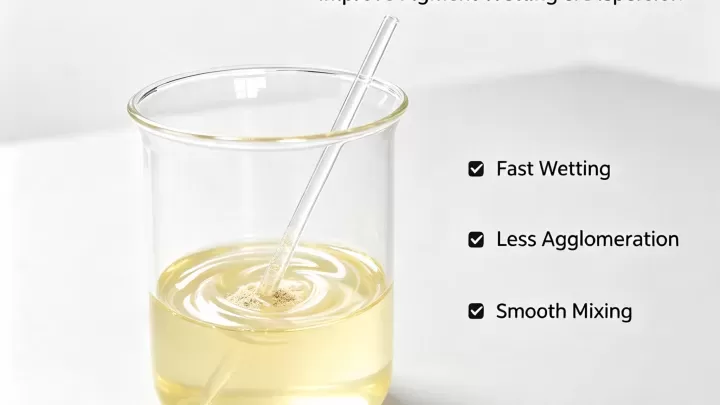
Carbon black, a high-surface-area carbonaceous pigment produced by incomplete hydrocarbon combustion, is widely used in coatings, inks, rubber, plastics, and electronics due to its excellent blackness, conductivity, and UV protection properties . However, its primary particles (10–50 nm) exhibit strong van der Waals forces and hydrogen bonding, leading to severe agglomeration . Dispersants—amphiphilic agents with anchoring groups and solvent-compatible chains—play a critical role in breaking down these agglomerates, stabilizing individual particles, and optimizing carbon black performance in end products . This article dissects their working mechanisms, classification, and key factors governing effectiveness.
Dispersants stabilize carbon black through three primary mechanisms, often acting synergistically to prevent re-agglomeration:
Ionic dispersants (anionic, cationic) adsorb onto carbon black surfaces via their anchoring groups, imparting a uniform charge (typically negative for anionic types) . This creates an electrical double layer around each particle, and when two charged particles approach, electrostatic repulsion overcomes attractive van der Waals forces . A key metric for this mechanism is Zeta potential—particles with an absolute Zeta potential >30 mV exhibit stable dispersion . For example, the anionic polymer dispersant ammonium salt of styrene-maleate copolymer (SMA-NH₄) achieves a Zeta potential of -45.7 mV at pH 8, ensuring robust electrostatic stabilization for carbon black MA-100 . This mechanism is most effective in aqueous systems .
High-molecular-weight polymeric dispersants (e.g., polyurethanes, polyacrylates, polycarboxylates) form thick adsorption layers (5–20 nm) on carbon black surfaces . Their solvent-compatible polymer chains extend into the dispersion medium, creating a physical barrier that prevents particle contact . The effectiveness depends on chain solubility—well-dispersed chains in a "good solvent" maximize steric resistance . Novel dispersants like Patcham’s high molar volume (HMV) polymer PAT-ADD DA 3204 feature ultra-dense anchoring groups and thicker adsorption layers, delivering superior steric stabilization for high-surface-area carbon blacks . This mechanism is dominant in solvent-based systems and high-solid formulations .
Many modern dispersants combine electrostatic repulsion and steric hindrance, offering enhanced stability across diverse conditions (e.g., high electrolyte concentrations, extreme pH) . For instance, star-shaped polyurethane dispersants provide charge-based stabilization in aqueous systems and steric protection in solvent-based formulations, making them versatile for water-oil universal applications . This dual mechanism is critical for long-term storage stability, as demonstrated by dispersants that maintain carbon black dispersion in 50℃ thermal storage tests for 21 days .
Dispersants are classified by chemical structure and compatibility with dispersion media:
Type | Examples | Working Principle | Ideal Applications |
Anionic Dispersants | Polyacrylates, polycarboxylates, SMA-NH₄, methylene bis naphthalene sulfonate | Electrostatic repulsion; optimal at pH 8–9 | Aqueous coatings, inks, water-based plastics |
Nonionic Dispersants | Polyvinyl pyrrolidone (PVP), polyethers, polyesters | Steric hindrance; pH-insensitive | Solvent-based systems, cosmetics, pharmaceuticals |
Polymeric Dispersants | Polyurethanes, polyacrylates, HMV polymers | Electrosteric stabilization; thick adsorption layers | High-performance coatings, 2KPU systems, industrial paints |
Specialty Dispersants | Silicone-based dispersants, cationic polymers | Steric hindrance or electrostatic attraction (for acidic carbon black) | Electronics, rubber reinforcement, sensitive formulations |
Dispersant performance depends on the interplay of carbon black properties, dispersion conditions, and formulation parameters:
Proper dispersion with high-performance dispersants delivers tangible benefits across industries:
Dispersants are indispensable for unlocking carbon black’s full potential by addressing its inherent agglomeration tendency. Through electrostatic repulsion, steric hindrance, or synergistic electrosteric stabilization, they ensure uniform particle dispersion, long-term stability, and optimal performance in end products. The choice of dispersant depends on carbon black characteristics (surface chemistry, SSA), dispersion medium (aqueous vs. solvent-based), and application requirements (e.g., high temperature, food contact). By understanding these mechanisms and influencing factors, formulators can select dispersants that enhance product quality, reduce costs, and meet industry standards.