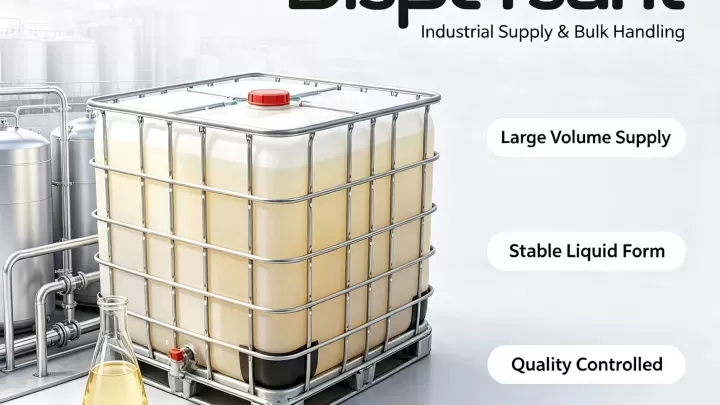
Dispersants are surface-active agents that play a pivotal role in optimizing the performance of pigment-based systems, including coatings, inks, plastics, and textiles. Pigments, whether organic or inorganic (e.g., infrared reflective pigments, acid dyes, or composite oxides), inherently tend to aggregate due to intermolecular forces such as van der Waals attraction, hydrogen bonding, and electrostatic interactions. These aggregates compromise pigment dispersion uniformity, leading to defects like uneven coloring, reduced hiding power, poor gloss, and compromised functional performance (e.g., infrared reflectivity, fastness properties). Dispersants mitigate these issues by adsorbing onto pigment particle surfaces, modifying their surface chemistry, and enabling stable dispersion in the target medium. This document systematically explains the core mechanisms by which dispersants act on pigments, supported by chemical principles, industry standards, and practical application examples.
Core Mechanisms of Dispersants in Pigments
Dispersants function through three interconnected mechanisms, tailored to the pigment type (organic/inorganic), particle size, and dispersion medium (aqueous/solvent-based). These mechanisms collectively overcome aggregation forces and maintain long-term stability.
Electrostatic Stabilization (Double Layer Mechanism)
Electrostatic stabilization is dominant in aqueous systems and inorganic pigments (e.g., Pigment Brown 29, titanium dioxide) with charged surface groups .
- Action Process: Dispersant molecules (typically anionic, e.g., polycarboxylates, phosphate esters) adsorb onto pigment particle surfaces via ionic interactions with surface hydroxyl (-OH) or metal ions . The hydrophilic head groups of dispersants extend into the aqueous medium, forming a negatively charged electrical double layer around each particle .
- Stabilization Principle: Repulsive forces between identically charged particles (Coulomb repulsion) counteract attractive van der Waals forces, preventing particle aggregation . The thickness of the double layer (measured by the zeta potential) determines stability—zeta potential values between ±30 mV indicate effective dispersion .
- Application Example: For rutile-type Pigment Brown 29 (Fe-Mn-Ti-O) in water-based architectural coatings, anionic dispersants (e.g., sodium polyacrylate) adsorb onto Ti⁴⁺ sites on the pigment surface, achieving a zeta potential of -35 mV and maintaining dispersion stability for 6 months without sedimentation.
Steric Stabilization (Entropic Repulsion)
Steric stabilization is critical for solvent-based systems, organic pigments, and high-solid formulations (e.g., automotive coatings, plastic masterbatches) .
- Action Process: Dispersants with amphiphilic structures (e.g., block copolymers, polyetheramines) adsorb onto pigment surfaces via hydrophobic segments (e.g., alkyl chains), while their hydrophilic or solvophilic segments (e.g., polyether, polyester) extend into the dispersion medium . These extended chains form a steric barrier around each particle .
- Stabilization Principle: When pigment particles approach each other, the steric barriers overlap, compressing the extended dispersant chains and reducing the entropy of the system . This entropic penalty creates a repulsive force that prevents particle coalescence . The length and density of the extended chains directly influence stability—longer chains with high surface coverage provide superior steric protection .
- Application Example: In solvent-based automotive coatings using carbon black pigment, block copolymer dispersants (e.g., poly(styrene-acrylic acid) copolymers) form a 10-20 nm steric layer, preventing aggregation even at high pigment loading (30% by weight).
Electrosteric Stabilization (Synergistic Mechanism)
Electrosteric stabilization combines electrostatic and steric effects, offering enhanced stability for complex systems (e.g., water-based inks, hybrid pigment formulations) .
- Action Process: Dispersants (e.g., graft copolymers with ionic and non-ionic segments) adsorb onto pigment surfaces through ionic interactions (electrostatic component), while their long non-ionic side chains provide steric hindrance .
- Stabilization Principle: The electrostatic double layer provides short-range repulsion, while the steric barrier prevents particle contact at longer distances . This synergistic effect ensures stability across a wide range of pH values, temperatures, and pigment concentrations .
- Application Example: For acid dyes (e.g., Acid Black 2) in textile dyeing baths, amphoteric dispersants (e.g., amino acid derivatives) adsorb onto dye particles via anionic sulfonate groups (electrostatic) and form a steric layer with polyoxyethylene side chains, preventing aggregation in weakly acidic conditions (pH 4-5).
Key Roles of Dispersants in Optimizing Pigment Performance
Beyond stabilization, dispersants deliver multiple performance benefits that directly impact end-product quality:
1 Improving Dispersion Uniformity and Color Consistency
- Mechanism: By breaking down pigment aggregates into primary particles (10-1000 nm) and maintaining their uniform distribution, dispersants ensure consistent color strength and shade across the product.
- Impact: In plastic extrusion using infrared reflective pigments (e.g., Cobalt Aluminum Blue), dispersants eliminate "color spots" and ensure uniform NIR reflectance (±2% variation) across the finished product.
2 Enhancing Pigment Functional Performance
- For Infrared Reflective Pigments: Dispersants prevent particle aggregation, which would reduce NIR reflectance by increasing light scattering and absorption . For example, well-dispersed Pigment Brown 29 maintains a TSR of 40-42%, while aggregated particles show a 15-20% reduction in TSR.
- For Textile Dyes: Dispersants improve dye solubility and penetration into fibers, enhancing color fastness (wash, light, rubbing) by 1-2 grades . Acid Black 2 dispersed with non-ionic dispersants (e.g., fatty alcohol ethoxylates) achieves wash fastness of Grade 4-5 (GB/T 3921-2008).
3 Reducing Processing Energy and Dosage Requirements
- Mechanism: Dispersants lower the viscosity of pigment slurries/mixtures, reducing the energy required for mixing, grinding, and application (e.g., spraying, extrusion) . They also increase pigment efficiency, allowing target color/functionality at lower pigment dosages.
- Data Support: In water-based coatings, adding 0.5-1.0% dispersant (relative to pigment weight) reduces grinding time by 30-40% and lowers pigment dosage by 10-15% while maintaining hiding power.
4 Extending Product Shelf Life and Durability
- Mechanism: By preventing pigment sedimentation, flocculation, or re-agglomeration, dispersants extend the shelf life of pigment formulations (e.g., inks, paints) from months to years . They also reduce pigment-induced degradation of the dispersion medium (e.g., polymer chain scission in plastics).
- Example: Plastic masterbatches containing Nickel Titanium Yellow (IR pigment) and polyolefin dispersants maintain stable color and thermal performance for 2 years of storage, compared to 3-6 months for non-dispersed formulations.
Factors Influencing Dispersant Efficacy
The performance of dispersants depends on several critical factors that must be optimized for specific pigment systems:
1 Pigment Characteristics
- Surface Chemistry: Inorganic pigments with charged surfaces (e.g., metal oxides) favor anionic dispersants, while organic pigments (e.g., phthalocyanines) with non-polar surfaces require non-ionic or block copolymer dispersants.
- Particle Size and Shape: Smaller pigment particles (nanoscale) have higher surface energy and require dispersants with high adsorption affinity; irregularly shaped particles need dispersants with flexible chains to cover uneven surfaces.
2 Dispersant Properties
- Chemical Structure: The type of functional groups (ionic/non-ionic), molecular weight (MW), and chain length affect adsorption and stabilization. For example, high-MW polycarboxylates (MW 10,000-50,000) are ideal for large pigment particles, while low-MW dispersants (MW 1,000-5,000) work better for nanoscale pigments.
- Compatibility with Medium: Dispersants must be soluble in the dispersion medium—water-soluble dispersants for aqueous systems, solvent-soluble dispersants for organic solvents . Incompatible dispersants cause phase separation and reduced stability.
3 Formulation and Processing Conditions
- pH Value: Electrostatic stabilization is pH-dependent; anionic dispersants perform best in alkaline conditions (pH 7-9), while cationic dispersants (rarely used for pigments) work in acidic environments.
- Temperature: High processing temperatures (e.g., plastic extrusion at 200-250℃) require heat-stable dispersants (e.g., polyphosphates, silicone-based dispersants) to avoid thermal degradation.
- Pigment Loading: Higher pigment concentrations demand higher dispersant dosages (typically 0.1-5% of pigment weight), but excessive dispersant can cause foaming or reduced film properties.
Practical Application Guidelines
1 Dispersant Selection Criteria
- Match dispersant type to pigment surface chemistry (ionic/non-ionic) and dispersion medium (aqueous/solvent-based) .
- Evaluate zeta potential (for aqueous systems) or steric layer thickness (for solvent-based systems) to confirm stabilization efficacy.
- Verify compatibility with other additives (e.g., thickeners, stabilizers) to avoid adverse reactions (e.g., flocculation, viscosity spikes) .
2 Dosage Optimization
- Conduct gradient tests (0.1-5% dispersant relative to pigment weight) to determine the minimum effective dosage—excessive dispersant may reduce gloss or adhesion.
- For complex pigment blends (e.g., multiple IR pigments), use a combination of dispersants to address different pigment surface properties.
3 Processing Best Practices
- Add dispersants before or during pigment grinding to maximize adsorption onto fresh particle surfaces.
- Control mixing speed and temperature to avoid dispersant desorption (e.g., high shear may strip dispersants from pigment surfaces).
References
- 1. IBuyChem. (n.d.). Cool Pigments: Infrared Reflective Pigments in Coatings. Retrieved from https://m.ibuychem.com/expert/article/2542945
- 2. MDPI. (2025). A Review of Near-Infrared Reflective Nanopigments: Aesthetic and Cooling Properties. Retrieved from https://www.mdpi.com/2073-4352/15/3/271
- 3. American Coatings Association (ACA). (2024). Dispersants for Coatings: Principles and Applications. Retrieved from https://www.paint.org/discover-coatings/coatings-technology/dispersants
- 4. Society of Plastic Engineers (SPE). (2023). Dispersion Technology for Plastic Masterbatches. Retrieved from https://www.spe.org/en/technical-resources/dispersion-technology
- 5. National Standard of the People's Republic of China. (2008). GB/T 3921-2008: Textiles - Testing Method for Color Fastness to Washing.
- 6. Antpedia. (n.d.). KS M 5506-2021: Testing Method for Infrared Reflectance. Retrieved from https://www.antpedia.com/standard/sp/en/953540.html
- 7. Heubach Group. (2025). Technical Data Sheet: Dispersants for Infrared Reflective Pigments. Retrieved from https://www.heubach.com/products/additives/dispersants
- 8. Chemical Abstracts Service (CAS). (n.d.). Surface-Active Agents (Dispersants) - CAS Registry Overview. Retrieved from https://www.cas.org/support/documentation/chemical-substances