Introduction
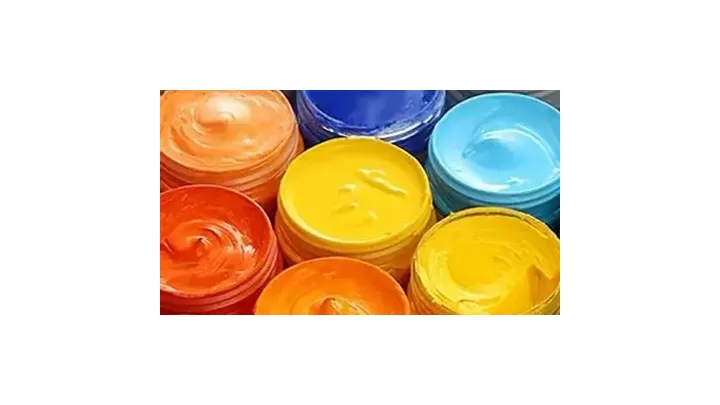
Organic pigment pastes, as pre-dispersed systems consisting of organic pigments (e.g., azo, quinophthalone, heterocyclic types), dispersants, solvents, and additives, are critical raw materials in coatings, inks, plastics, textiles, and packaging industries . Unlike inorganic pigment pastes, organic pigment pastes are more sensitive to concentration variations due to their smaller particle size, higher surface energy, and tendency to flocculate . Concentration—defined as the mass percentage of organic pigment in the total paste formulation (typically 20-55% for industrial use)—directly influences color consistency, dispersion stability, functional performance (e.g., light fastness, chemical resistance), and production cost-effectiveness . Improper concentration control can lead to defects such as floating, flooding, poor hiding power, and reduced durability, especially for high-performance organic pigments like Pigment Yellow 119, Pigment Red 122, and Acid Black 2 . This document systematically analyzes the importance of organic pigment paste concentration in production and provides practical selection guidelines for factories, supported by industry standards, technical data, and practical insights.
The Critical Importance of Organic Pigment Paste Concentration in Production
Ensuring Color Consistency and Reproducibility
Organic pigments are valued for their vivid shades, but their color strength is highly concentration-dependent:
- Color Strength Control: Concentration directly determines the amount of pigment available for coloring—even a 3-5% deviation can cause visible color differences (ΔE* > 1.5), leading to batch rejection . For example, Pigment Yellow 119 paste (quinophthalone type) with a target concentration of 50% requires precise control (±2%) to maintain its characteristic greenish-yellow shade; a 45% concentration results in a lighter, duller color (ΔE*=2.3) .
- Avoiding Floating and Flooding: Organic pigments’ small particle size (D₅₀=0.1-1.0 μm) makes them prone to flocculation if concentration is too high or too low . Over-concentrated pastes increase viscosity, leading to poor dispersion and uneven color distribution; under-concentrated pastes reduce particle-particle interaction, causing pigment migration during film formation (floating) .
- Compliance with Quality Standards: Industrial standards such as ISO 11664-2 (color measurement) and GB/T 13493-2006 (water-based color pastes) require organic pigment paste concentration variation ≤±3% to ensure batch-to-batch color consistency .
Maintaining Dispersion Stability and Functional Performance
Dispersion stability is critical for organic pigment pastes, as flocculation directly impairs their performance:
- Dispersion Stability: Optimal concentration ensures that dispersant molecules fully adsorb onto organic pigment particle surfaces, preventing flocculation and sedimentation . For example, Pigment Red 122 paste (quinacridone type) with a concentration of 40% maintains a stable dispersion (no sedimentation after 6 months storage) when paired with appropriate dispersants, while a 50% concentration leads to flocculation due to insufficient dispersant coverage .
- Light and Weather Fastness: Organic pigments’ light fastness (typically Grade 4-8 on the blue wool scale) is concentration-dependent . Adequate concentration (35-45%) ensures uniform pigment distribution, enhancing UV resistance—for instance, Pigment Blue 15:3 paste (phthalocyanine type) with 40% concentration achieves light fastness Grade 7, while a 30% concentration shows Grade 5 after 500h xenon lamp aging (ISO 105-B02) .
- Chemical Resistance: Concentration affects organic pigments’ resistance to acids, alkalis, and solvents . Proper concentration (40-50%) ensures a continuous pigment network in the film, improving chemical resistance (Grade 4-5 per DIN 16524) . Under-concentrated pastes (<30%) result in incomplete coverage, reducing resistance to chemical migration .
Optimizing Production Efficiency and Cost Control
Concentration balance is key to reducing production costs and improving efficiency:
- Dosage Efficiency: High-concentration organic pigment pastes (45-55%) reduce the volume of paste added to formulations, minimizing mixing time and energy consumption . For example, a 50% concentration Pigment Yellow 184 paste requires half the dosage of a 25% concentration paste to achieve the same color depth, cutting mixing time by 30-40% .
- Waste Reduction: Consistent concentration avoids rework caused by color deviations. A study showed that factories using strict concentration control for organic pigment pastes reduced color-related waste by 28-35% compared to those with unregulated usage .
- Inventory Management: High-concentration pastes occupy less storage space and reduce transportation costs. For instance, 1 ton of 50% concentration Pigment Red 254 paste delivers the same pigment content as 2 tons of 25% concentration paste .
Ensuring Compatibility with Processing Conditions
Organic pigment pastes’ concentration must align with production processes and substrates:
- Viscosity Control: Coating and ink applications require organic pigment pastes with viscosity 50-200 mPa·s (25℃) . Over-concentrated pastes (>55%) exceed this range, requiring additional solvent dilution that may alter color shade and compatibility .
- Plastic Processing: High-temperature processes (e.g., PP extrusion at 180-220℃) require organic pigment pastes with concentration 30-45% to avoid thermal degradation . For example, Pigment Yellow 119 paste (50% concentration) maintains heat stability up to 240℃, compatible with engineering plastic processing .
- Textile Dyeing: Aqueous organic pigment pastes for textile printing require concentration 25-35% to ensure uniform penetration into fibers; higher concentrations lead to surface deposition and poor fastness.
Factory Guidelines for Selecting Organic Pigment Pastes
Define Core Requirements Based on Application
Substrate and Medium Compatibility:
- Water-based systems (architectural coatings, textile printing): Select water-soluble organic pigment pastes with concentration 25-40%, compatible with acrylic/polyurethane resins . For example, Acid Black 2 paste (30% concentration) is suitable for cotton fabric reactive dyeing .
- Solvent-based systems (automotive coatings, gravure inks): Choose solvent-soluble pastes (concentration 45-55%) with good compatibility with ketones/esters. Pigment Yellow 119 paste (50% concentration) works for high-gloss solvent-based inks .
- Food contact plastics: Select FDA-compliant organic pigment pastes (e.g., Pigment Yellow 119 meeting FDA 21 CFR Part 73) with concentration 30-40% .
Functional Requirements:
- Outdoor applications (exterior coatings, automotive parts): Prioritize pastes with concentration 40-50% to enhance light fastness (≥Grade 6) and weather resistance (≥Grade 4) .
- High-gloss finishes (packaging inks, furniture coatings): Choose pastes with concentration 45-55% to ensure good dispersion and gloss (≥85 GU at 60°) .
Evaluate Key Quality Indicators
- Concentration Stability: Verify batch-to-batch concentration variation ≤±3% via gravimetric analysis (EN ISO 787-2) .
- Dispersion Quality: Particle size D₅₀ ≤0.5 μm (measured by laser diffraction) to ensure uniform distribution . For example, Pigment Red 122 paste with D₅₀=0.3-0.4 μm avoids flocculation in coatings .
- Viscosity and Flowability: Viscosity 50-200 mPa·s (25℃, Brookfield viscometer) for easy mixing . Thixotropic index 1.2-1.5 ensures stability during storage .
- Durability Performance: For coatings, check light fastness (≥Grade 6) and weather resistance (≥Grade 4); for plastics, verify heat stability (≥200℃ for PE/PP processing) .
- Compatibility Test: Use the "rub-out test" to evaluate compatibility with the base system—mix 2-3% paste with the base material, apply a film, and rub the surface; no significant color difference indicates good compatibility .
Ensure Compatibility with Production Processes
- Processing Temperature: High-temperature processes (e.g., powder coating curing at 200℃) require pastes with heat-stable organic pigments. Pigment Yellow 119 paste (50% concentration) withstands ≤240℃, suitable for such applications .
- Mixing Equipment: Low-shear mixers require low-viscosity, well-dispersed pastes (concentration 30-40%), while high-shear mixers can handle high-concentration pastes (50-55%) .
- Dosage System: Automated dosage systems work best with consistent viscosity pastes (concentration 40-50%) to ensure accurate metering.
Verify Regulatory Compliance
Global Standards: Comply with EU REACH (no restricted substances), RoHS (heavy metal limits), and GB/T 18582-2008 (harmful substances in coatings) .
Special Applications:
- Food contact: FDA 21 CFR Part 73 (for plastics) or GB 9685-2016 (additives for food contact materials) .
- Children’s products: EU EN 71-3 and US ASTM F963 (heavy metal limits, e.g., lead ≤90 ppm) .
- Textiles: Oeko-Tex Standard 100 (Class I for infants, no harmful aromatic amines) .
Assess Supplier Reliability and Technical Support
- Manufacturing Capabilities: Select suppliers with strict quality control (e.g., HPLC concentration testing, particle size analysis) and consistent production processes for organic pigments .
- Technical Documentation: Request technical data sheets (TDS) including concentration, particle size, viscosity, compatibility, and durability data; safety data sheets (SDS); and batch test reports .
- After-Sales Support: Choose suppliers offering on-site guidance for dosage optimization, dispersion troubleshooting, and color matching . For example, suppliers of Pigment Yellow 119 paste should provide formulation recommendations for different ink systems .
Practical Application Cases
Case 1: Water-Based Architectural Coatings (Pigment Yellow 184)
- Requirements: Color consistency ΔE* <1.5, light fastness ≥Grade 6, VOC ≤100 g/L .
- Selection: Water-based organic pigment paste (40% concentration, D₅₀=0.4 μm, viscosity 120-150 mPa·s) .
- Process Parameters: Paste dosage 2.5% of coating weight, mixing at 800 rpm for 15 minutes .
- Results: Color consistency across batches, light fastness Grade 6-7 (ISO 105-B02), meeting GB/T 13493-2006 standards .
Case 2: Solvent-Based Automotive Coatings (Pigment Red 122)
- Requirements: Heat stability ≥200℃, salt spray resistance ≥1000h, high gloss (≥90 GU) .
- Selection: Solvent-based organic pigment paste (50% concentration, D₅₀=0.3 μm, solvent resistance Grade 5) .
- Formulation: Paste dosage 3% + acrylic resin + UV absorber + block copolymer dispersant.
- Results: Gloss maintained at 92-93 GU, salt spray resistance 1200h, meeting automotive OEM standards.
Case 3: PP Plastic Toy Production (Pigment Yellow 119)
- Requirements: FDA compliance, light fastness ≥Grade 7, no migration .
- Selection: PP-compatible organic pigment paste (35% concentration, FDA 21 CFR Part 73 compliant) .
- Processing Parameters: Masterbatch concentration 10%, paste dosage 1.5% of plastic weight, extrusion temperature 180±3℃ .
- Results: No heavy metal migration (SGS test), color consistency ΔE* <1.0, service life ≥5 years .
Quality Control and Concentration Testing Methods
- Gravimetric Analysis (EN ISO 787-2): Measure dry pigment mass after solvent evaporation to calculate concentration .
- Laser Diffraction: Determine particle size distribution (D₅₀) to ensure dispersion quality .
- Color Measurement: Use a spectrophotometer (CIE Lab*) to verify color consistency with standard samples .
- Viscosity Test: Brookfield viscometer (25℃, spindle 6, 100 rpm) to ensure viscosity within 50-200 mPa·s .
- Storage Stability Test: Monitor concentration and viscosity over 6 months (25℃/60% RH) to ensure no sedimentation or flocculation .
References
- 1. International Organization for Standardization (ISO). (2023). ISO 11664-2: Colorimetry - Part 2: CIE Standard Illuminants.
- 2. National Standard of the People's Republic of China. (2006). GB/T 13493-2006: Water-Based Color Pastes for Coatings.
- 3. National Standard of the People's Republic of China. (2008). GB/T 3921-2008: Textiles - Testing Method for Color Fastness to Washing.
- 4. European Committee for Standardization (CEN). (2022). EN ISO 787-2: General Methods of Test for Pigments and Extenders - Part 2: Determination of Loss on Drying.
- 5. American Society for Testing and Materials (ASTM). (2023). ASTM D2196-15: Standard Test Method for Rheological Properties of Non-Newtonian Materials by Rotational (Brookfield) Viscometer.
- 6. Douyin Encyclopedia. (n.d.). Color Paste (Product Made by Dispersing Pigments in Binders). Retrieved from https://m.baike.com/wiki/%E8%89%B2%E6%B5%86/2453007?baike_source=doubao
- 7. China Quality News Network. (2022). How to Scientifically Select and Use Ink Products. Retrieved from https://m.cqn.com.cn/cg/content/2022-02/09/content_8782794.htm
- 8. DIN. (2021). DIN 16524: Testing of Dyestuffs - Determination of Fastness to Acids and Alkalis.