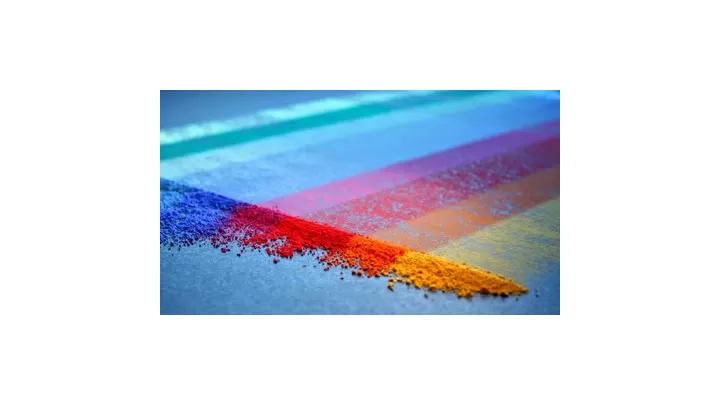
Pigments are indispensable components in coatings, inks, plastics, and cosmetics, delivering color, opacity, and functional properties. However, their inherent tendency to agglomerate—driven by van der Waals forces and hydrogen bonding between primary particles (typically 10–100 nm)—poses significant challenges: uneven coloring, sedimentation, poor gloss, and reduced storage stability . Dispersants, as amphiphilic additives with anchoring groups and solvent-compatible chains, address these issues by regulating pigment-particle interactions. This article explores their key mechanisms, multifaceted roles, and tangible application value across industries, supported by technical data and real-world insights.
Dispersants perform seven interconnected functions that underpin high-quality pigment performance, from initial processing to end-product durability:
Dispersants reduce the interfacial tension between pigment particles and the dispersion medium (resin, solvent, or water), enabling the medium to penetrate gaps in pigment agglomerates . This replaces air trapped on pigment surfaces, preparing aggregates for mechanical breakdown during grinding. For example, low-molecular-weight wetting agents lower surface tension from 72 mN/m (pure water) to 30–40 mN/m, accelerating wetting of hydrophobic organic pigments like phthalocyanine blue . Without effective wetting, even high-shear grinding fails to dissociate agglomerates, leading to inefficient pigment utilization.
Working synergistically with mechanical force (e.g., bead milling), dispersants adsorb onto pigment surfaces and weaken interparticle cohesion . Their anchoring groups (e.g., carboxyl, phosphate, or amine groups) form strong chemical or physical bonds with pigment functional sites—acidic carbon black, for instance, binds preferentially to basic dispersant groups . This fragmentation exposes more pigment surface area, maximizing color development. Ammonium polyacrylate, a widely used anionic dispersant, achieves particle size reduction to ≤500 nm for inorganic pigments like TiO₂, a 60% improvement in uniformity compared to non-dispersed systems .
The most critical function of dispersants is long-term stabilization, achieved through two primary mechanisms:
Well-dispersed pigment particles minimize interparticle friction, significantly lowering the viscosity of slurries and formulations . This enables higher pigment loading—critical for concentrated colorants—without compromising flow. For example, a high-concentration pigment paste (60% pigment content) formulated with polycarboxylate ether dispersants achieves a viscosity of ≤1500 mPa·s, compared to >5000 mPa·s without dispersants . Reduced viscosity improves sprayability in coatings, preventing nozzle clogging and ensuring uniform film thickness .
Dispersed primary particles reflect and absorb light more efficiently, boosting pigment coloring power by 30% or more . This allows manufacturers to reduce pigment dosage by 15–20% while maintaining color intensity, cutting raw material costs . Additionally, uniform particle size (≤800 nm) creates smoother coating surfaces, increasing gloss by 20–40% in high-gloss paints . In inks, this translates to vibrant, high-definition prints with consistent color across substrates .
In multi-pigment systems, dispersants stabilize particles of varying densities and sizes, preventing separation (floating) or uneven color distribution (blooming) during drying . This is critical for metallic coatings and mixed-color inks, where visual defects can render products unsellable. A case study in automotive refinish coatings showed that selecting resin-compatible dispersants reduced blooming by 90%, eliminating rework and material waste .
Dispersants prevent pigment sedimentation and clumping during storage—even for 30–180 days—ensuring products remain homogeneous and ready for use . For example, a water-based coating formulated with WD-001 dispersant reduced pigment sedimentation rate from 25% to 3%, maintaining usability after months of storage . In end products, stabilized pigments resist fading, chalking, and degradation, extending service life: high temperature resistance dispersants (e.g., WT-005) ensure pigments retain color stability after 1000 hours of high-temperature aging .
Dispersants deliver measurable economic and performance benefits across key pigment-consuming sectors:
Dispersants are the largest product segment in ink additives (28% market share), driven by demand for high-quality printing in packaging and textiles . They optimize ink rheology for high-speed digital, flexographic, and gravure printing, reducing misting and improving registration accuracy . The global dispersants for inks market is projected to grow at a CAGR of 4.6%, reaching USD 1.8 billion by 2032, as e-commerce fuels demand for durable, vibrant packaging prints . Bio-based dispersants are gaining traction to meet low-VOC regulations in European and North American markets .
In plastic coloring, dispersants ensure uniform pigment distribution in masterbatches, preventing streaking and specks in extruded or molded products . Food-contact-grade dispersants (e.g., WT-007) enable safe coloring of baby products and food containers, while high-temperature-stable dispersants (OB-1-compatible) withstand plastic processing temperatures (180–220℃) . A toy manufacturer using cost-effective WD-003 dispersant reduced raw material costs by 22% without sacrificing color quality .
Global regulations drive the adoption of safe, low-impact dispersants:
Future trends include multi-functional dispersants (combining wetting, defoaming, and stabilization), smart dispersants responsive to pH or temperature, and bio-based formulations (e.g., lignin derivatives) to address sustainability goals . Manufacturers are also developing application-specific dispersants—e.g., for 3D printing inks and flexible electronics—to meet evolving industry needs .
Dispersants are indispensable additives that unlock the full potential of pigments, transforming their performance from raw material to end product. By addressing wetting, dispersion, stabilization, and other critical challenges, they deliver tangible value: reducing costs through pigment savings and waste reduction, improving product quality and consistency, and enabling compliance with stringent regulations. As industries demand higher performance, lower environmental impact, and greater versatility, dispersants will continue to evolve—driving innovation in pigment-based products across coatings, inks, plastics, and beyond. Their role as "performance enablers" underscores their status as a cornerstone of the global pigment industry.